pseudo
Junior Member
- Joined
- Mar 6, 2012
- Member Type
- Interested in Language
- Native Language
- Korean
- Home Country
- South Korea
- Current Location
- South Korea
Dear teachers, I have a question about participle clause.
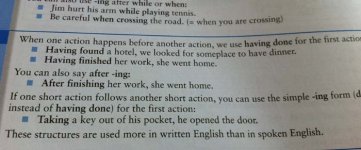
I have learned when one action happens before another action, we use having p.p. for the first action.
Since he looks very tired today, he won't come here tomorrow.
--> s1. Having looked very tired today, he won't come here tomorrow.
--> s2. Looking very tired today, he won't come here tomorrow.
which one is correct?
I have learned when one action happens before another action, we use having p.p. for the first action.
Since he looks very tired today, he won't come here tomorrow.
--> s1. Having looked very tired today, he won't come here tomorrow.
--> s2. Looking very tired today, he won't come here tomorrow.
which one is correct?