For years/over the last...years

Anna232

Senior Member
Joined
Mar 17, 2024
Member Type
Teacher (Other)
Native Language
Georgian
Home Country
Georgia
Current Location
Georgia
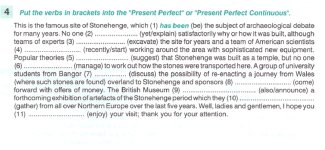
This exercise is from the book CPE Use of English by Virginia Evans.

The correct options in #3 and #10 are "have been excavating" and "have been gathering". Are "have excavated" and "have gathered" not idiomatic and ungrammatical? Should present perfect progressive be used because of the phrases "for years" and "over the last five years?" I understand that it depends not only on the context but also on the idiomatic use. I came across this example "I have been learning English for a long time. (Not usually "I've learnt") in English Grammar in Use. So my question is is present perfect progressive a better option in examples with "for years" and "over the last five years?"
 

Attachments

  • Screenshot_20251029_074619_All PDF Reader.jpg
    Screenshot_20251029_074619_All PDF Reader.jpg
    339.3 KB · Views: 19
With #3, it's hard to choose the right answer without knowing whether the various teams of experts have finished excavating the site. If they haven't, then "have been excavating" is correct. If they're done, then "excavated" would be appropriate.

With #10, my first choice would be "have gathered".
 
With #3, it's hard to choose the right answer without knowing whether the various teams of experts have finished excavating the site. If they haven't, then "have been excavating" is correct. If they're done, then "excavated" would be appropriate.

With #10, my first choice would be "have gathered".

Thank you so much for your explanation. It is not easy to choose the correct tense. The book doesn't give present perfect simple as the correct option. So it is wrong to say that only present perfect continuous should be used with "For years" and "over the last xxx years," isn't it? It depends whether the action is finished or not. Right?
 
So it is wrong to say that only the present perfect continuous should be used with "for years" and "over the last xxx years," isn't it?
Yes, it would be wrong to use that as a blanket rule.
It depends whether the action is finished or not. Right?
That's certainly a factor.
 
Yes, it would be wrong to use that as a blanket rule.
I think the book should include several possible answers.

That's certainly a factor.
Isn't the action finished in # 10, or does "over the last ... years" suggest continuation? Does the book use the present perfect continuous to imply that it was in progress recently?
 
The 'correct' answer, which means the best answer, or in other words the answer you have to put, to question 10 is 'have been gathering'. Yes, the preposition 'over' strongly biases toward using a progressive aspect. So although the present perfect simple does work in question 10, the present perfect continuous is the correct answer for this exercise.

The preposition phrase 'for years' in question 3 also strongly biases toward a progressive aspect. Remember that the main point of the present perfect continuous is that there is an emphasis on the progressive nature of the action, so duration time phrases like 'for years' go nicely hand in hand.

To give you a very simple rule: use present perfect continous with 'over' and 'for' time phrases and use present perfect simple with 'in' time phrases.

For/Over the last five years, the British Museum has been gathering a number of new artifacts.
In the last five years, the British Museum has gathered a number of new artifacts.
 
I think the book should include several possible answers.

The whole idea of this kind of exercise is to put whatever fits best in the provided context. There's no good in putting a 'possible' answer if it isn't the right one.

Isn't the action finished in # 10, or does "over the last ... years" suggest continuation?

The 'perfect' part of both the present perfect simple and the present perfect continuous shows that the time frame, not the action, has its endpoint now. No, 'over the last five years' does not imply continuation.

Does the book use the present perfect continuous to imply that it was in progress recently?

No. It means the action was in progress within a time frame that began five years ago and runs up to now.
 
The whole idea of this kind of exercise is to put whatever fits best in the provided context. There's no good in putting a 'possible' answer if it isn't the right one.

The 'perfect' part of both the present perfect simple and the present perfect continuous shows that the time frame, not the action, has its endpoint now. No, 'over the last five years' does not imply continuation.

No. It means the action was in progress within a time frame that began five years ago and runs up to now.
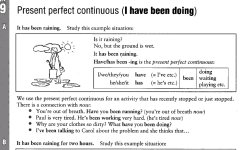
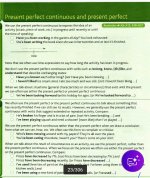
I also wanted to ask about present perfect continuous being used in examples to talk about actions that were recently in progress but are finished now.
The examples I have seen are about simple situations such as "Here you are at last. I have been waiting for you for two hours."
That's why in answer to emsr2d2 answer "If they're done, then "excavated" would be appropriate" I wanted to ask if I know that they are done, why can't I use "have been excavating" to imply that it was recently in progress?

These screenshots are from Raymond Murphy's English Grammar in Use and Martin Hewing's English Grammar in Use. Actions expressed by present perfect continuous that were recently in progress are mentioned in both, but perhaps present perfect continuous is used for recent finished actions to talk about "simple" situations and not about excavations or gathering artefacts. I know that present perfect continuous is correct in the original examples, but I thought it should be used because they have recently finished.
 

Attachments

  • Screenshot_20251030_203829_All PDF Reader.jpg
    Screenshot_20251030_203829_All PDF Reader.jpg
    252.7 KB · Views: 5
  • Screenshot_20251030_204218_All PDF Reader.jpg
    Screenshot_20251030_204218_All PDF Reader.jpg
    978 KB · Views: 5
Last edited:
why can't I use "have been excavating" to imply that it was recently in progress?

Yes, the correct answer is 'have been excavating' but it doesn't mean that anything was recent. It just means the action took place in a time frame that progressed up to now.


present perfect continuous is used for recent finished actions to talk about "simple" situations and not about excavations or gathering artefacts.

No, you're on the wrong lines there.
 
Yes, the correct answer is 'have been excavating' but it doesn't mean that anything was recent. It just means the action took place in a time frame that progressed up to now.

No, you're on the wrong lines there.

Yes, I was not sure that was right. Let me rephrase it. Present perfect continuous is used to talk about actions that recenly stopped as the book says (I have been exercising or I have been gardening) and it is also used to talk about actions that took place and progressed up to now and haven't finished yet. Right?
 
Since nobody has answered your above question, you may take a look at the following article:


We often use for, since and how long with the present perfect continuous to talk about ongoing single or repeated actions.
 

Ask a Teacher

If you have a question about the English language and would like to ask one of our many English teachers and language experts, please click the button below to let us know:

(Requires Registration)
Back
Top