shootingstar
Member
- Joined
- Nov 17, 2022
- Member Type
- Student or Learner
- Native Language
- German
- Home Country
- Germany
- Current Location
- Germany
This is a tree of life. Lots of religions and mythologies have talked about the tree of life. It's there in Buddhism, Judaism and Christianity. Lots of philosophers and writers have talked about tree metaphers too. For Sylvia Plath, existence was a fig tree and each possible life she could live - the happily-married one, the successful-poet one - was this sweet juicy fig, but she couldn't get to taste the sweet juicy figs and so they just rotted right in front of her. It can drive you insane, thinking of all the other lives we don't live."
(The Midnight Library by Matt Haig, episode The Tree That Is Our Life)
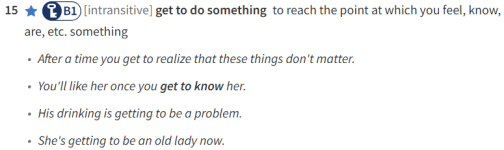
What does "couldn't get to taste" mean in this context? "Couldn't" seems to suggest impossibility there. However, "get to do" seems to indicate just the same or pretty nearly so. Or do I have to take it as "but she couldn't get herself to taste the sweet figs"? What does "get to taste" mean there?
get to

(The Midnight Library by Matt Haig, episode The Tree That Is Our Life)
What does "couldn't get to taste" mean in this context? "Couldn't" seems to suggest impossibility there. However, "get to do" seems to indicate just the same or pretty nearly so. Or do I have to take it as "but she couldn't get herself to taste the sweet figs"? What does "get to taste" mean there?
get to
Last edited: