It's a useful phrase, but it's not a complete sentence.Is this correct?:
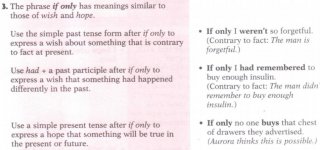
If only I see him again. (= I hope I see him again.)I can't find any example in my grammar references.
No, it's not.Thanks for the answer, but your example is more like "only if".
Thanks for the answer, but your example is more like "only if".It's a useful phrase, but it's not a complete sentence.
To make it a full sentence, you can say, for example, I'll pay him back if only I see him again.
I agree. I wouldn't phrase it that way, either. But it does express a hope or wish, which is what Mike seems to be looking for. it does somewhat correspond with his "I hope to see him again."That doesn't strike me as very natural.
To make it a full sentence, you can say, for example, I'll pay him back if only I see him again.
That doesn't strike me as very natural. I'd say I'll pay him back if I (ever) I see him again.
If only functions for me in a similar way to I wish:
I wish we had more money. If only we had more money.
I wish he's stop drinking. If only he'd stop drinking.
So, my answer to Mikes question, "Can we use "if only" with the simple present?" is "Not normally".


If you have a question about the English language and would like to ask one of our many English teachers and language experts, please click the button below to let us know: