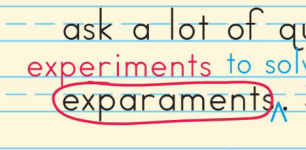
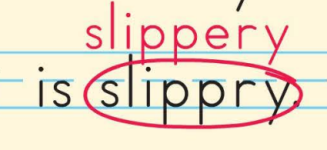
Can you edit a writing like this in your country?

chinsontan

Member
Joined
Nov 20, 2025
Member Type
English Teacher
Native Language
Chinese
Home Country
China
Current Location
China
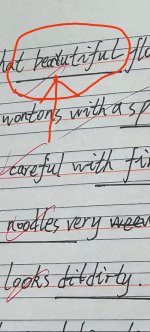
As the attached picture shows, can you edit a word like this in your country?
I really can't accept that.
b.jpg
 
I can't see clearly what's happening in the image, or indeed understand what you're asking. Has the writer included an extraneous letter 't'? Like 'beatutiful'? Is that what you mean?
 
I can't see clearly what's happening in the image, or indeed understand what you're asking. Has the writer included an extraneous letter 't'? Like 'beatutiful'? Is that what you mean?
I mean can we correct a word by correcting just one letter instead of rewritting the whole word.
 
I mean can we correct a word by correcting just one letter instead of rewriting the whole word?
Of course we can. You've posted a screenshot of an example of it already! However, it all depends on the situation. If you're in an exam and you spell something incorrectly, I'd say the best thing is to cross it out completely and write the correct version.
 
Of course we can. You've posted a screenshot of an example of it already! However, it all depends on the situation. If you're in an exam and you spell something incorrectly, I'd say the best thing is to cross it out completely and write the correct version.
So, you are an English Teacher in Britain? Do you let your students correct a word like the attachment shows. I don't go with that. Just as you say, in formal situations, it's better to rewrite the whole word. So I think it's better to do it in daily life, so that they won't forget the right way.
 
If you're asking how best to mark learners' writing, there's no one answer, and it's often not a good idea to make corrections anyway. In this case, you could, for example, just underline the word and mark it with a code that means 'spelling mistake'. Otherwise, you could just mark the erroneous letter 't' with a red pen or highlighter to point out the error and then let the learner work out what the issue is. People generally learn better when they correct themselves. Your job as a teacher is to help your students do that.
 
And these are the ways that books tell me.
I go with that.
1763712288788.png1763712356315.png
 
So, Are you are an English teacher in Britain? Do you let your students correct a word like the attachment shows? I don't go with that. Just as you say, in formal situations, it's better to rewrite the whole word. So I think it's better to do it the same in daily life informal situations no comma here so that they won't forget the right way.
Corrections on screen and corrections in physical writing are done differently. I teach what we call "Use of English" so it's almost all spoken. I don't get written work from my students. You can see my method of digital correction in the quote box above, where I've made several corrections to your text.

As far as the original goes, it's a poor attempt at a correction by the writer. They haven't made it clear that they're trying to delete the incorrectly placed "t". All they've done is give it a second horizontal line! That's not helpful. If I'd been given that, I would have advised the student to either cross out the whole word and start again or at least completely obliterate that incorrect "t".
 
If you're asking how best to mark learners' writing, there's no one answer, and it's often not a good idea to make corrections anyway. In this case, you could, for example, just underline the word and mark it with a code that means 'spelling mistake'. Otherwise, you could just mark the erroneous letter 't' with a red pen or highlighter to point out the error and then let the learner work out what the issue is. People generally learn better when they correct themselves. Your job as a teacher is to help your students do that.
I didn't mean that. It was the student corrected his writing when doing homework, and he corrected just one letter in the middle of the word. For me, I would point out that it would not be a good way of writing. I will have the student to cross out the whole word and rewrite it.
Would you have them do that?
 
I think I need to change my question like that:
Option 1: Do you agree with a handwriting word like this beatutiful?
Option 2: Or you will do it like this beatuiful beautiful?
Option 3: Or both are OK for you?
 
Corrections on screen and corrections in physical writing are done differently. I teach what we call "Use of English" so it's almost all spoken. I don't get written work from my students. You can see my method of digital correction in the quote box above, where I've made several corrections to your text.

As far as the original goes, it's a poor attempt at a correction by the writer. They haven't made it clear that they're trying to delete the incorrectly placed "t". All they've done is give it a second horizontal line! That's not helpful. If I'd been given that, I would have advised the student to either cross out the whole word and start again or at least completely obliterate that incorrect "t".
I go with the whole word thing. It's strange for me to have a mistake in the middle of the word. I take the words are the smallest unit of a sentence. For when you are speaking, you won't just correct one sound or phoneme but the whole word.
 

Ask a Teacher

If you have a question about the English language and would like to ask one of our many English teachers and language experts, please click the button below to let us know:

(Requires Registration)
Back
Top