I have had a dog

Status
Not open for further replies.

Rachel Adams

Key Member
Joined
Nov 4, 2018
Member Type
Student or Learner
Native Language
Russian
Home Country
Georgia
Current Location
Georgia
Does this sentence sound natural?

"I have had dogs" or "I have had a dog" I mean that I had dogs before and I am planning on having dogs in the future. Or it is a very unusual example to show that the present perfect conveys an idea that something is not finished?

As in, "I have had three exams" which means I haven't passed all exams yet.
 
Does this sentence sound natural? Which sentence? There are two that follow this question.

1. "I have had dogs." [STRIKE]or[/STRIKE]
2. "I have had a dog."

I mean that I had dogs before and I am planning on having dogs in the future. [STRIKE]Or it[/STRIKE] Is it a very unusual example to show that the present perfect conveys an idea that something is not finished?

As in no comma here "I have had three exams" which means I haven't passed all exams yet.

Both sentences would be grammatical answers to "Have you ever had a dog?" (instead of just saying "Yes"). However, most native speakers would probably say "I used to have a dog/dogs". None of them suggest that you are planning to get another dog in the future.

"I have had three exams" doesn't mean what you think it does. In fact, I can't really come up with a context in which it would be natural at all. If you have to take, for example, ten exams and you've only taken three of them so far, you would say "I have taken three exams. I've got seven to go". Neither your version nor mine give any indication of whether you passed or failed those exams.
 
"I have had three exams" doesn't mean what you think it does. In fact, I can't really come up with a context in which it would be natural at all. If you have to take, for example, ten exams and you've only taken three of them so far, you would say "I have taken three exams. I've got seven to go". Neither your version nor mine give any indication of whether you passed or failed those exams.

Sorry, I meant to say "I have had three exams" which means I haven't taken all exams yet.
 
Last edited by a moderator:
Sorry, I meant to say "I have had three exams" which means I haven't taken all exams yet.

That's no better.

1. Don't use "have" when talking about exams. Use either "take" or "sit".
I have taken three exams.
I have sat three exams.

2. As I already said, it gives no indication that you have more exams to take/sit. It is a simple statement of fact. The use of the present perfect here doesn't indicate that something isn't finished.
 
As I already said, it gives no indication that you have more exams to take/sit. It is a simple statement of fact. The use of the present perfect here doesn't indicate that something isn't finished.

I must be confusing different uses. I remember our discussion about the difference between the present perfect and the simple past tense. Instead of saying "I have learnt a lot on UE" I said "I learnt" which wasn't correct as I was and am still on the forum. I thought with my exam sentences I could use the tenses in the same way.
 
Last edited by a moderator:
I must be confusing different uses. I remember our discussion about the difference between the present perfect and the simple past tense. Instead of saying "I have learnt a lot on UE" I said "I learnt" which wasn't correct as I was and am still on the forum..
Right, but there is no suggestion that you are going to learn more.
 
I think you're misunderstanding that different parts of a sentence can deemed "unfinished" when using the present perfect. Here are a couple of examples:

I have eaten three bars of chocolate this week > The only thing we know is unfinished is "this week". We know you've had three bars of chocolate since the beginning of the week. We have no way of knowing if you will eat any more. The "finished" version would be "I ate three bars of chocolate last week".

I have won three tennis tournaments for Downs Tennis Club > The only thing we know is that you are still a member of the club. We don't know if you will win, or even enter, any more tournaments. If you were no longer a member of the club, you'd say "I won three tennis tournaments for Downs Tennis Club". However, if you add a time marker to that sentence, we would have no way of knowing if you're still a member - "I won three tennis tournaments for Downs Tennis Club last year".
 
Right, but there is no suggestion that you are going to learn more.

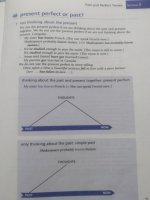
I was also judging by the explanation given in "Practical English Usage" by Michael Swan.

1. "We've studied enough to pass the exam." (The exam us still to come.)

2. "We studied enough to pass the exam. (The exam is over.)
IMG_20210405_154501.jpg
 
1. "We've studied enough to pass the exam." (The exam us still to come.)
The speaker is not necessarily going to sit the exam.
2. "We studied enough to pass the exam. (The exam is over.)
The speaker did not necessarily sit the exam.

Don't try to read too much meaning into the tense/aspect used in one sentence.
 
The speaker is not necessarily going to sit the exam.
The speaker did not necessarily sit the exam.

.

But it's not impossible for "I have had three exams" to mean that I have more exams to pass, is it?
I understand Swan's example to mean that the exam is still to come because of the construction "to pass" not because of the present perfect.
"We've studied enough to pass the exam." (The exam is still to come.)

If I added "I have taken three exams so far" or "this week" perhaps that would suggest that more exams are still to come?
 
Last edited by a moderator:
But it's not impossible for "I have had three exams" to mean that I have more exams to pass, is it?
The words could be used in that situation, but the words alone do not mean that.
I understand Swan's example to mean that the exam is still to come because of the construction "to pass" not because of the present perfect.
"We've studied enough to pass the exam." (The exam us still to come.)
The exam is still to come, but 'we' are not necessarily going to take it.
 
Right, but there is no suggestion that you are going to learn more.

The present perfect in "I have learnt a lot on UE" is correct unlike the simple past because it's a fact and also suggests that I am still on the forum. You said there is no suggestion that I am going to learn more, but doesn't the present perfect suggest that I am still learning?
 
The present perfect in "I have learnt a lot on UE" is correct unlike the simple past because it's a fact and also suggests that I am still on the forum. You said there is no suggestion that I am going to learn more, but doesn't the present perfect suggest that I am still learning?

No! I don't know how else to explain it. For all we know, you might never learn anything else useful in the future, even if you remain a member for the next 50 years!
 
No! I don't know how else to explain it. For all we know, you might never learn anything else useful in the future, even if you remain a member for the next 50 years!


Sorry, but I have to ask again. Regarding the part below from your answer. The first sentence (I won....") is used if the person is no longer a member of the club, which is like my incorrect sentence: "I learnt" instead of "I have learnt" where my sentence with the past simple was wrong as am still on UE. I hopefully don't misunderstand anything here.
It still seems unusual to me. If we say "I have travelled a lot" I am talking about life experiences. The person may travel again it's definitely not "finished" unlike "I travelled" which is finished. The original sentence "I have learnt" seems to be the same to me.


But regarding this part:
"If you were no longer a member of the club, you'd say "I won three tennis tournaments for Downs Tennis Club". However, if you add a time marker to that sentence, we would have no way of knowing if you're still a member - "I won three tennis tournaments for Downs Tennis Club last year". If without a time marker it's clear that the person is no longer a member of the club, why adding the time marker makes it unclear if the speaker is a member or not?
 
Last edited:
Sorry, but I have to ask again. Regarding the part below from your answer. The first sentence (I won....") is used if the person is no longer a member of the club, which is like my incorrect sentence: "I learnt" instead of "I have learnt" where my sentence with the past simple was wrong as am still on UE. I hopefully don't misunderstand anything here.
It still seems unusual to me. If we say "I have travelled a lot" I am talking about life experiences. The person may travel again it's definitely not "finished" unlike "I travelled" which is finished. The original sentence "I have learnt" seems to be the same to me.

There's a difference between claiming that the use of the present perfect means the person will travel again and what you're now saying - that they might travel again. That's what we've been saying all along - it's impossible to tell whether they will travel again - they might.


But regarding this part:
"If you were no longer a member of the club, you'd say "I won three tennis tournaments for Downs Tennis Club". However, if you add a time marker to that sentence, we would have no way of knowing if you're still a member - "I won three tennis tournaments for Downs Tennis Club last year". If without a time marker it's clear that the person is no longer a member of the club, why does adding the time marker [STRIKE]makes[/STRIKE] make it unclear if the speaker is a member or not?

It doesn't make it unclear. It makes it possible that either one might be the case. Consider the following two sentences, both of which start with my tennis original but finish very differently.

I won three tennis tournaments for Downs Tennis Club last year but then I resigned and joined a rival team.
I won three tennis tournaments for Downs Tennis Club last year and I'm hoping to win four for them this year.

Both sentences start the same but they end completely differently. In the first, I am no longer a member of that club but in the second, I am still a member.
 
The speaker is not necessarily going to sit the exam.
The speaker did not necessarily sit the exam.

Don't try to read too much meaning into the tense/aspect used in one sentence.

In "I have studied enough to pass the exam" is it possible for it to mean that the exam is over?

For example, if leave the classroom very disappointed and tell my friend that I have studied enough to pass the exam but have failed it.
 
Status
Not open for further replies.

Ask a Teacher

If you have a question about the English language and would like to ask one of our many English teachers and language experts, please click the button below to let us know:

(Requires Registration)
Back
Top