
In the morning/in the afternoon

Anna232

Senior Member
Joined
Mar 17, 2024
Member Type
Teacher (Other)
Native Language
Georgian
Home Country
Georgia
Current Location
Georgia
Should I stress only "afternoon" and/or "morning" or is the whole phrase usually stressed? Are the other words stressed correctly?

If he has time, he will play tennis in the afternoon/in the morning.
 
Last edited:
I can make an argument for stressing "If", "he", "time", "tennis", "morning" or "afternoon", or a combination of those. It all depends on context and what message you're trying to convey. You'll need to elaborate on that.
 
I can make an argument for stressing "If", "he", "time", "tennis", "morning" or "afternoon", or a combination of those. It all depends on context and what message you're trying to convey. You'll need to elaborate on that.
If in a very general sense, just stating what will likely take place on condition that the mentioned person will have time, I am just saying that he will play tennis. But if it is wrong to stress articles and prepositions, I am not sure if I should stress them or not.
 
If you want to stress that the whole thing is conditional upon his being free tomorrow, then I'd heavily stress "If".

If he has time, I'll play tennis with him tomorrow. (It makes no difference to the grammar whether you're going to play in the morning or the afternoon.)

Don't forget that these sentences don't spring out of people's mouths without any context. They would be part of a longer dialogue and that's what would dictate where the stress falls.
 
If you want to stress that the whole thing is conditional upon his being free tomorrow, then I'd heavily stress "If".

If he has time, I'll play tennis with him tomorrow. (It makes no difference to the grammar whether you're going to play in the morning or the afternoon.)

Don't forget that these sentences don't spring out of people's mouths without any context. They would be part of a longer dialogue and that's what would dictate where the stress falls.
Yes, without knowing the context it is difficult to decide. 😐If I stressed them according to some basic rules which version would be more natural? I didn't stress "will" because it is an auxiluary verb.
1. If he has time, he will play tennis in the afternoon/in the morning.

2.
If he has time, he will play tennis In the afternoon/morning.
 
I must be missing something. If you stressed all the words in bold in either sentence, you'd sound incredibly unnatural! I really can't work out what you're trying to do (or what you think you're trying to do). I just read your sentence out loud as a standalone sentence with no context, and I didn't "stress" any of the words. I'm wondering if we're not working to the same definition of "stress".
 
I believe this is what you're looking for:

If he has time, he'll play tennis in the afternoon.

Note that only the first and last syllables are stressed in 'afternoon'. In 'morning' it's just the first.
 
I must be missing something. If you stressed all the words in bold in either sentence, you'd sound incredibly unnatural!

Anna232 seems to be asking about sentence stress—the pattern of stressed syllables that creates the rhythm of speech.
 
Anna232 seems to be asking about sentence stress—the pattern of stressed syllables that creates the rhythm of speech.
OK, that's clearly not how I was reading it. They put whole words in bold so I thought they wanted to know which complete words to stress. Syllables makes far more sense.
 
OK, that's clearly not how I was reading it. They put whole words in bold so I thought they wanted to know which complete words to stress. Syllables makes far more sense.
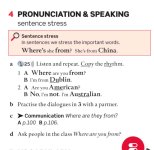
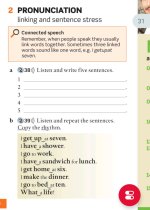
I am sorry, I am asking about stressing the whole words, not the syllables. I came across sentence stress in my book.
 

Attachments

  • Screenshot_20250627_132320_All PDF Reader.jpg
    Screenshot_20250627_132320_All PDF Reader.jpg
    167.6 KB · Views: 2
  • Screenshot_20250627_132347_All PDF Reader.jpg
    Screenshot_20250627_132347_All PDF Reader.jpg
    224.4 KB · Views: 2
Anna232 seems to be asking about sentence stress—the pattern of stressed syllables that creates the rhythm of speech.
No, sorry. I mean sentence stress.
I stressed the words that are usually stressed.

If he has time, he will play tennis in the morning.

If he doesn't have time, he won't play tennis in the morning.
 
Last edited:
No, sorry. I mean sentence stress. I stressed the words that are usually stressed.

If he has time, he will play tennis in the morning.

If he doesn't have time, he won't play tennis in the morning.
Here's how I would stress the words in those sentences if I wasn't trying to emphasise anything in particular.

If he has time, he will play tennis in the morning.
If he doesn't have time, he won't play tennis in the morning.

There are far too many words marked as stressed in your originals.
 
I am asking about stressing the whole words, not the syllables.

In sentence stress, you stress syllables, not words. You only stress whole words when they consist of only one syllable. The way the writer of English File has written it has understandably confused you. In the words Dublin, American and Australian, only the syllables I've put in bold are stressed.

Here's how I would stress the words in those sentences if I wasn't trying to emphasise anything in particular.

If he has time, he will play tennis in the morning.
If he doesn't have time, he won't play tennis in the morning.

As you correctly said above, you can only stress syllables, and not whole multisyllabic words, so this is not right. It goes like this:

If he has time, he'll play tennis in the afternoon.
If he doesn't have time, he won't play tennis in the afternoon.
 
Last edited:
I'm aware that I (probably unhelpfully) didn't mark up the individual syllables, but I stand by my minimalist stress markups! Those are the only words that I would use any stress on at all in such simple sentences. Of course I agree that only the first syllable of "morning" and "doesn't" would be stressed.

I'm not sure now that all 3 of us mean the same thing by "stress"!
 
I'm not sure now that all 3 of us mean the same thing by "stress"!

Right. It seems to me that you're thinking of emphasis, not sentence stress. Plus, the fact that English File (where the screenshots in post #10 are from) insists on embolding the whole word rather than just the stressed syllable has not helped the confusion here.
 
I was never thinking of "sentence stress". In fact, I'd never even heard of it until this thread. I absolutely should have differentiated between words and syllables each time I posted. However, as I said, if I read those sentences aloud (as I have done many times over the last 24 hours), I still find that I "stress" just two words (or a part of the same two words) each time.
 

Ask a Teacher

If you have a question about the English language and would like to ask one of our many English teachers and language experts, please click the button below to let us know:

(Requires Registration)
Back
Top