
=Alex=
Member
- Joined
- Aug 26, 2021
- Member Type
- Student or Learner
- Native Language
- Russian
- Home Country
- Russian Federation
- Current Location
- Russian Federation
Hello, everyone! It is me again and my strange questions about participles.
I can’t understand how participles describe noun.
On this time I will try to explain my problem with this picture.
Let’s look at this picture.
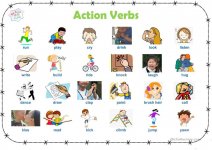
The boy runs. He is a running boy.
The child plays. He is a playing child.
The child cries. He is a crying child.
“The hand” writes. It is a writing hand.
The girl builds something. She is a building girl.
The girl rides on the bicycle. She is a girl riding on the bicycle.
People dances. They are dancing people.
“The other hand” draws a lion. It is a hand drawing a lion.
I could say all these sentences in the Present Continuous tense not in the Present Simple.
For example:
The boy is running. He is a running boy.
The people are dancing. They are dancing people etc.
Am I wrong again?
I hope moderators will not delete this thread because I really want to understand this!
P.S.
I found this explanation:
Active participial adjectives are formed from the present participles of verbs. They describe nouns that are actively causing or participating in an action.
From here: http://www.mit.edu/course/21/21.guide/adj-p-a.htm
And this: When -ing forms are used like adjectives or adverbs, they have similar meanings to active verbs.
From here: https://staff.washington.edu/marynell/grammar/partadj.html
Based on these definitions, I don't understand why my explanations are wrong.
Because in each sentences they all describe nouns that are actively causing or participating in an action. In my sentences they are only participating in an action, not causing.
I can’t understand how participles describe noun.
On this time I will try to explain my problem with this picture.
Let’s look at this picture.
The boy runs. He is a running boy.
The child plays. He is a playing child.
The child cries. He is a crying child.
“The hand” writes. It is a writing hand.
The girl builds something. She is a building girl.
The girl rides on the bicycle. She is a girl riding on the bicycle.
People dances. They are dancing people.
“The other hand” draws a lion. It is a hand drawing a lion.
I could say all these sentences in the Present Continuous tense not in the Present Simple.
For example:
The boy is running. He is a running boy.
The people are dancing. They are dancing people etc.
Am I wrong again?
I hope moderators will not delete this thread because I really want to understand this!
P.S.
I found this explanation:
Active participial adjectives are formed from the present participles of verbs. They describe nouns that are actively causing or participating in an action.
From here: http://www.mit.edu/course/21/21.guide/adj-p-a.htm
And this: When -ing forms are used like adjectives or adverbs, they have similar meanings to active verbs.
From here: https://staff.washington.edu/marynell/grammar/partadj.html
Based on these definitions, I don't understand why my explanations are wrong.
Because in each sentences they all describe nouns that are actively causing or participating in an action. In my sentences they are only participating in an action, not causing.
Last edited:


