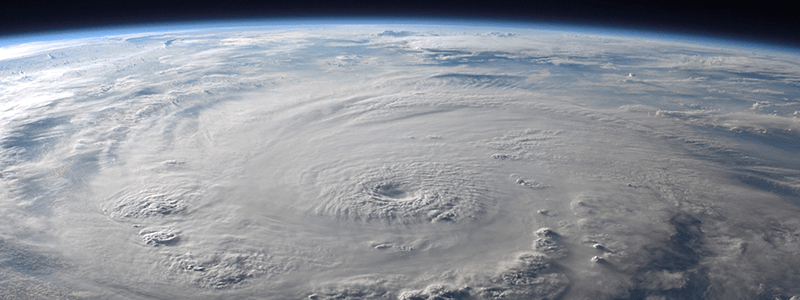
storm / hurricane

Status
Not open for further replies.

Mnemon

Member
Joined
Sep 22, 2021
Member Type
Interested in Language
Native Language
Persian
Home Country
Iran
Current Location
Iran
Hi.

1642358523865.png
English Vocabulary in Use book


Do you concur with the the statements mentioned above? Do you differentiate between the two that way?
 
Not a teacher.

I'm not a meteorologist, but I'm pretty sure a hurricane is a type of storm.
I feel like these definitions have been simplified to the point of inaccuracy.

Here, just looked it up. See for yourself.
 
I agree both are over-simplified and somewhat inexact. A storm doesn't necessarily have to have both wind and rain. My region frequently gets what we call wind and dust storms - completely devoid of any precipitation at all. Plus, even when there is wind and precipitation, it may be snow or hail instead of rain, such as blizzards or hailstorms.

Hurricanes are storms originating over a body of tropical water with cyclonic (rotating) winds reaching a minimum wind-speed of 74 mph/119 kph. I suppose you could simplify that to something like "Hurricanes are a rotating storm starting over water with high winds" and maintain reasonable accuracy. The key elements are rotating winds and water-based origin.
 
Hurricanes are also called typhoons or cyclones, depending on the part of the world they hit.
 
Hurricanes are also called typhoons or cyclones, depending on the part of the world they hit.
From NOAA:

Once a tropical cyclone reaches maximum sustained winds of 74 miles per hour or higher, it is then classified as a hurricane, typhoon, or tropical cyclone, depending upon where the storm originates in the world. In the North Atlantic, central North Pacific, and eastern North Pacific, the term hurricane is used. The same type of disturbance in the Northwest Pacific is called a typhoon. Meanwhile, in the South Pacific and Indian Ocean, the generic term tropical cyclone is used, regardless of the strength of the wind associated with the weather system.

I'm not sure if that's referring to regional dialects (i.e. what the locals call such a storm), or if that's some kind of scientific label/jargon. Perhaps a bit of both.
 
Hurricanes are also called typhoons or cyclones, depending on the part of the world they hit.

Cyclone is the term used in South Asia, and typhoon (presumably from the Chinese) in East Asia.

By the way, further to Skrej's comment, a sandstorm or dust storm is a horrible experience. The grit gets into your eyes, ears, nose and mouth and unless you can hide in a house or car all you can do is curl up and wait it out.
 
SE Asia, from my experience uses typhoon too- the Philippines has its own naming system, but calls them typhoons.
 
Thank you folks.

and typhoon (presumably from the Chinese)
Typhoon
Origin
Late 16th century partly via Portuguese from Arabic ṭūfān (perhaps from Greek tuphōn ‘whirlwind’); reinforced by Chinese dialect tai fung ‘big wind’.

a sandstorm or dust storm is a horrible experience.
Never experienced that before, though rather familiar with thunderstorm.

I'm reminded of the very well-known idiom, which is different in AE/BE. Assuming a tempest is a kind of storm, as well.

Tempest in a teapot (American English), or storm in a teacup (British English), is an idiom meaning a small event that has been exaggerated out of proportion.
 
Cyclone is the term used in South Asia, and typhoon (presumably from the Chinese) in East Asia.
SE Asia, from my experience uses typhoon too- the Philippines has its own naming system, but calls them typhoons.

I was watching a video just this morning where somebody from the Philippines (speaking US English) referring to them as 'cyclones'.
 
Interesting- I never heard that when I was there, and I was there when Typhoon Yolanda/Haiyan struck. I looked in the Wikipedia page and it uses typhoon, including on Philippine maps, though it does also say tropical cyclone at one point. I did a search of a friend's emails, and they only use typhoon. I can't say who the speakers are who use cyclone.
 
Status
Not open for further replies.

Ask a Teacher

If you have a question about the English language and would like to ask one of our many English teachers and language experts, please click the button below to let us know:

(Requires Registration)
Back
Top