Look, mrmvp, I do this for a living. I teach teachers how to write valid test questions for EFL learners. I'm trying to help, and if you don't want me to, then fine, but I'll have one last go at explaining what you're doing wrong.
Each "question" must be related to and grammatically consistent with the options.
That's right, yes.
What is the capital of Russia?
A. Moscow
B. Is
C. Delicious
D. burger
Now, all the answer choices are different, does that make them validd options for students to choose from?
No, that's a very poor question, because the four choices aren't of a similar category, conceptually or grammatically. The formatting (the verb form chosen, capitalisation, spelling, etc.) is trivial here.
Still, however poor it is, it's not as bad as the question posed in post #1, which offers the same answer for all three options. The only difference in those three answers is the grammar with which they're written. They're still the same answer. If you did that just for the purposes of asking us a question about which verb form is best to use when writing multi-choice test questions, then that's okay, but you've given the impression that that is the actual question you're going to use. In its current form, the question fails completely.
One starts with a noun in lowercase, another is an adjective, another is a "be" verb, and, above all, none-except the correct answer A

are cities or countries. These irrelevant choices make the question poorly designed/ written.
Absolutely right.
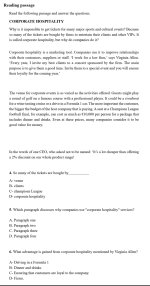
The following is a real example I prepared for my business students :
The phrase "get free publicity" in the marketing
strategies means__________
A. advertise your company without paying.
B. reaching a target audience.
C. to promote your latest range.
D. offer discounts.
Again the options are different, do you think they are consistent as answer choices? Look at the words in bold.BTW, The correct answer is A.
That's much better, and this question is valid because you have four different answers of the
same category, which is that each answer makes sense
as a synonym for 'get free publicity'. The problem here though is that the verb forms in B. and C. are wrong, which is a grammatical, not conceptual issue, and easily fixed. Here's how the question should go:
What does the phrase get free publicity in the marketing strategy mean?
A. advertise your company without paying
B. reach a target audience
C. promote your latest range
D. offer discounts
Now each answer is in the same base form (infinitive) as the target phrase, and the question is good. In terms of formatting, notice that I've removed the full stops and undone the parts you bolded. I've chosen to use italic script to highlight the target word 'get free publicity' but your original choice of using qutation marks is not too bad. The answers don't need to be in italics too. (I'm not sure whether the word 'the' in the question makes sense but I'll take your word that it should be there. It's not important for what I'm saying.)
Moreover,—and this is very important—the question is now in
question form, not in gap-fill form. As in a previous thread last week, you've confused a gap-fill question with a multi-choice question, which is one source of your issues with selecting the grammtical form of the option. Multi-choice questions that are designed to test comprehension should be in question form. That's important. The only reason to use gaps in a multi-choice test is when you're testing
grammar or vocab,
not understanding. If your aim with this question
is to test something about grammar, then the question is invalid.
Here's an example of a multi-choice gap-fill test question:
She _____ to work every day.
A. goes
B. go
C. going
D. gone
Since this question is meant to test grammar, not comprehension, each option is in a different verb form. In such a test, this is entirely appropriate because it tests whether the taker knows which grammatical form is the correct one for the given context. There's no reading or listening test associated with this question, and the head sentence is not, and should not be, in question form because it's not a question. It's just a sentence designed to function as context for testing the grammar of verb forms.
Think about what you're testing:
Are you asking a question or not?
Are you testing the learners' comprehension of the text they've just read?
Are you testing their general knowledge of a particular subject?
Are you testing an element of their linguistic competency?
Don't test more than one of these things at the same time.


 By the way, I'm not sure that I interpreted your made-up question precisely when I edited it.


 a little
  because I wrote them. I admit I haven’t finished editing the exam yet. The students will take it next week, and apart from the punctuation issues, in my humble opinion, the exam questions are appropriate for their level. They are dead easy, and I know that well. Almost all my students are at the A1–A2 level, and all of them are taking this subject as an elective course in college.


