[Grammar] children who... / the number of children who...

Status
Not open for further replies.

optimistic pessimist

Senior Member
Joined
Jan 1, 2008
Member Type
Native Language
Japanese
Home Country
Japan
Current Location
Japan
Hi all,

1. Children who learn programming are increasing.
2. The number of children who learn programming is increasing.

3. Carbon Dioxide in the atmosphere is increasing.
4. The amount of carbon Dioxide in the atmosphere is incresing.

I think #1 and #3 look okay. However, is it better to add "the number of" and "the amount of" respectively?

OP
 
Yes, but 'Carbon' only needs to be capitalised when it opens the sentence, and 'dioxide' must be in lower case.
 
Hi all,
If so, "Farmland area in my hometown is decreasing." is better than
"Farmland in my hometown is decreasing."?

OP
 
No. How did you reach that conclusion?
 
1 is wrong. 3 is just about okay.

Both versions in post #4 are also wrong.
 
It was careless of me. I should have written,...

If so, "
The amount of farmland (or The area of farmland)
in my hometown is decreasing." is better than "Farmland in my hometown is decreasing."?
 
Last edited by a moderator:
The amount of farmland ... This is fine.
The area of farmland ... This is wrong.
Farmland ... This is bad enough that I'd correct it.

What you're doing is trying to talk about quantity, so you should make that clear.

I don't think you mean to say that there is any farmland in your hometown, by the way. Do you mean in your home country?
 
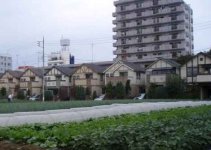
I live in a suburb of Tokyo, Japan. There used to be many small cabbage fields, spinach fields, and eggplant fields on the back streets.
Now I see new houses in what used to be the places to grow vegetables. If farmland refers to something larger-scale, I may have chosen the wrong word.

PA150139 (3).jpg
 
Yes, farmland is not the right word.
 
I still don't know why "hometown" doesn't go well with "farmland". If there's someone who was born and raised in a farming village that has huge farmland, I guess the village is his hometown. I thought "hometown" is a place where you were born and raised, so any city, town, and village could be called "hometown" regardless of their size or location. I'm sorry for this long question, but I'd like to know what I'm missing.
 
For a start, a village isn't a town, so a village can't be someone's hometown. A village might be near acres and acres of farmland, but it's not right to say the village "has huge farmland". "Farmland" is uncountable so it can't be described as "huge". That's like saying "The country is near huge water". It's not. It might be "near a huge body of water" or "near a sea/ocean" - those things are countable.
 
For a start, a village isn't a town, so a village can't be someone's hometown.
As a person whose home town* is a village, I can't agree. American usage of village varies by state. I don't think the word is widely used in most states, but in mine, incorporated municipalities of fewer than 5,000 people are legally villages. Such places that are big enough to support them typically have a number of businesses with names like Village Lanes (a bowling alley that operated for several decades in mine).

In my state (but this also varies in the United States), a town has no legal existence. We use the word informally to describe any municipality regardless of its legal description.

*(I use hometown only as an adjective. The place I lived before I moved to the country is my home town.)
 
I just remembered that the downtown neighborhood of what became my second home town when my family moved to California is commonly known as Palisades Village. I think the name was promoted by the area's developer in the 1930s and intended to evoke the image of a rustic, somewhat isolated place.
 
If there's someone who was born and raised in a farming village that has huge farmland, I guess the village is his hometown.

Farmland does not exist in towns or villages. Town and villages are areas where people live in communities. Farmland is outside the town or village, where farming happens.
 
Status
Not open for further replies.

Ask a Teacher

If you have a question about the English language and would like to ask one of our many English teachers and language experts, please click the button below to let us know:

(Requires Registration)
Back
Top