I don't have a good explanation of this but I have some thoughts I'd like to share. This is what I think is going on when we select either up or down.
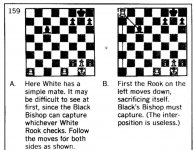
1) We select up/down depending on how we cognitively map the terrain. That is, if the direction is uphill, then we're very likely to say up because the map in our mind will fit very closely to the topology of the real world. In the chess board example, I think that up is far more likely too, because from our visual perspective as white, going from rank 1 to rank 8 appears to be an upward movement. From black's perspective, the very same movement is down. In reality, of course, it's neither, because the chessboard is flat on the desk. The only way I can think of to explain why someone playing as white would use down in the chess scenario is that in the cognitive map in his mind at the moment of speaking, there is a downhill movement. The topology of the battlefield has always played a key role in warfare strategy, and the idea of a 'charge' attack such as is made by the white rooks is easily framed in the mind as a fast movement downhill.
2) Another much vaguer idea I have is that the selection of up/down depends to some extent on existing knowledge. That is, we're more likely to use up when proceeding in a direction that is more familiar, and down when going in a less known direction. I believe that this is essentially the same point as that made by skrej in post #2 about up being the direction behind you and down ahead. In terms of cognitive semantics, there is a primary metaphor that [down=new], the converse of which is [up=known]. The same idea applies to text, when we talk for example about anaphor as going up (i.e. back) and cataphor as going down the text (the prefixes ana- and cata- meaning up and down respectively).