[Grammar] led

Status
Not open for further replies.

nininaz

Senior Member
Joined
Jul 30, 2013
Member Type
Student or Learner
Native Language
Italian
Home Country
Italy
Current Location
India
Hello,

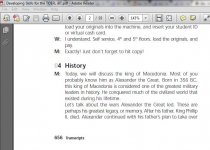
Let’s talk about the wars Alexander the Great led. These are
perhaps his greatest legacy, or memory. After his father, King Phillip
II, died, Alexander continued with his father’s plan to take over...


led means :
be in charge?
3 be in charge ?
http://www.ldoceonline.com/dictionary/lead_1

Thanks.
 
Last edited:
I don't find "led" to be natural in that context. Where did you find the text?
 
I don't find "led" to be natural in that context. Where did you find the text?

context : Let’s talk about the wars Alexander the Great led.
3[h=2]be in charge[/h] [intransitive and transitive] to be in charge of an organization, country, or team, or a group of people who are trying to do something:
http://www.ldoceonline.com/dictionary/lead_1
 
Yes, he was in charge of his army. But you don't lead wars, you fight wars. You lead armies.
 
You haven't answered my question. Where did you find the text?
 
I don't find "led" to be natural in that context. Where did you find the text?

Is this important to you?
I just want your guides. Because you all are native or English teacher.
We need your help & experience , That is enough for us. But all the time you are always trying to answer my questions with another question that never help me to learn more , and never be my desire answer.
All the time you just want to show that I am stupid.
you never help me, you always tries to have an objection on my posts.
Sorry to say that but I think you are not a patient teacher.

You haven't answered my question. Where did you find the text?

Source: Developing Skill for TOEFL IBT
 
Last edited:
That doesn't seem to have been written by a native English speaker.
 
Is this important to you?
I just want your guides. Because you all are native or English teacher.
We need your help & experience , That is enough for us. But all the time you are always trying to answer my questions with another question that never help me to learn more .
You never answer my question, you never help me, you always tries to have an objection on my posts.


Source: Developing Skill for TOEFL IBT

Context is important. Always.

What we are trying to do when we see texts that are not correct is determine where they are coming from. There is no use for you to study English based on texts that are not written in good English.

If you want help and advice, you need to cooperate.
 
Context is important. Always.

What we are trying to do when we see texts that are not correct is determine where they are coming from. There is no use for you to study English based on texts that are not written in good English.

If you want help and advice, you need to cooperate.

I certainly cooperate.But you can't find any posts that bhaisahab help me on answering the posts.

Anyway,Do you think there is something wrong in the context?
 
I certainly cooperate.But you can't find any posts that bhaisahab help me on answering the posts.

Anyway,Do you think there is something wrong in the context?

Yes, as I said above, I find it incorrect to talk about a war being "led."
 
We believe it is in your book. We also believe it is an error.
 
Neither a teacher nor a native-speaker.

Is this important to you?

But all the time you are always trying to answer my questions with another question that never help me to learn more , and never be my desire answer.
All the time you just want to show that I am stupid.
you never help me, you always tries to have an objection on my posts.
Sorry to say that but I think you are not a patient teacher.


Yes. Context is important to them. Look at the sentence I have highlighted in your post. "Never be my desire answer". If I ask a native speaker the function of "be" and "desire" here, he is sure to ask me the context. You could come up with a context where "be my answer" would fit but it certainly won't in this one.

By the way, if clearing your doubt after getting the context right, so that you'd have a better understanding of the matter, rather than going the easy way is not patience, then what is?

Yes, he was in charge of his army. But you don't lead wars, you fight wars. You lead armies.
But I searched Google and there are plenty of instances where "led the war" is used.

Example: In his three-plus terms from 1933 to 1945, he led the war against Hitler.
Source: http://www.nytimes.com/2013/04/07/books/review/fdr-and-the-jews-by-richard-breitman-and-allan-j-lichtman.html?pagewanted=all&_r=0
 
Last edited:
I am not a teacher.

You fight a war, you wage war, and you can be the leader of your people when you go to war. In that sense some people use lead to sum the whole idea up. The Roosevelt example reads better than the Alexander the Great one, given the context, but I don't think you could say that nininaz's book is entirely wrong, especially if there are several armies involved.
 
Hi nininaz,

It's generally not a good idea to insult those who are trying help you. I'm sure that wasn't your intention. Typing words on a screen sometimes muddles our minds.

Alexander the Great was a general. He led his army into wars.

You don't generally lead wars, you lead armies into war.

Justlearning found a great counter-example with the New York Times link (A very reliable source of good English, by the way).

However, FDR (Franklin Delano Roosevelt) mainly led an ideological war against Hitler. He led the Americans (army of American citizens) into war with Hitler.

American politicians, for example, are always saying they will lead a war against crime.

It's never safe to say that something is never heard in English conversation. That would be naive.

It would also be naive to think that ESL textbooks don't make errors. In fact, I have found some of their examples to be stilted, or even awkward. Sometimes it feels as if they weren't written by native speakers.

So, in general :), we don't say "lead the war" when it's an actual physical war. We can lead ideological wars, or armies into war.

But I also agree with Roman55's assessment. Alexander the Great led many armies into many wars against many nations. Therefore, we can talk about the wars that he led.

"Let’s talk about the wars Alexander the Great led."


--lotus
 
Last edited:
Hi nininaz,

It's generally not a good idea to insult those who are trying help you. I'm sure that wasn't your intention. Typing words on a screen sometimes muddles our minds.

Hi,
Thanks for your comments. Please don't take that offensive. I didn't mean to insult those who are volunteer helpers.I am really sorry about
the hurtful words that was said unintentionally. :-(
 
Last edited:
Status
Not open for further replies.

Ask a Teacher

If you have a question about the English language and would like to ask one of our many English teachers and language experts, please click the button below to let us know:

(Requires Registration)
Back
Top