the children of a late wealthy politician are going to inherit a fortune that had obviously been stolen or embezzled

Status
Not open for further replies.

Tony_M

Member
Joined
Sep 17, 2024
Member Type
Student or Learner
Native Language
Ukrainian
Home Country
Ukraine
Current Location
Ukraine
Hello.

The dialogue is mine.

A: Some people inherit a lot of money from their parents. Do you think that money should be taxed by the government?
B: Well, that depends on a few different factors. First, the amount of money being inherited matters, and, probably, if we know that the children of a late wealthy politician are going to inherit a fortune that had obviously been stolen or embezzled/was obviously stolen or embezzled, it makes sense to tax the money. But, of course, there should be some evidence.

1. If we know that the children of a wealthy politician who passed away are going to inherit a fortune that had obviously been stolen or embezzled, it makes sense to tax the money.
2. If we know that the children of a wealthy politician who has just passed away are going to inherit a fortune that had obviously been stolen or embezzled, it makes sense to tax the money.

Which sentence is the best option in this context? Are they all grammatically correct?

Thank you.
 
I don't think you need either. They're going to "inherit" a fortune. We know how that works.
 
Sorry, I don't understand.
 
Firstly, SoothingDave is saying that it's obvious the politician is dead, so get rid of that part.

Secondly, this is what I'd use:

If we know that the children of a wealthy politician are going to inherit a fortune that has obviously been stolen or embezzled, it makes sense to tax the money.
 
Firstly, SoothingDave is saying that it's obvious the politician is dead, so get rid of that part.

Secondly, this is what I'd use:

If we know that the children of a wealthy politician are going to inherit a fortune that has obviously been stolen or embezzled, it makes sense to tax the money.
The politician died, but before that he had embezzled a fortune.
 
I believe he is questioning "had been stolen" vs "has been."

I am fine with the original "had."
 
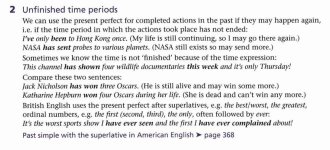
Now I have two different options. I don't understand why one would use the present perfect here. We can use the present perfect for completed actions in the past if they may happen again.
 
Now I have two different options. I don't understand why one would use the present perfect here. We can use the present perfect for completed actions in the past if they may happen again.
The embezzlement by that specific politician can't possibly happen again if they're dead.
 
The embezzlement by that specific politician can't possibly happen again if they're dead.
That's obvious.

My textbook (MyGrammarLab, Mark Foley, Diane Hall) says this:
"We can use the present perfect for completed actions in the past if they may happen again, i.e. if the time period in which the actions took place has not ended."

Having read this rule, I was choosing between the past perfect and simple past. I thought since the politician passed away in the past, I needed to place the action of embezzlement before that, hence the past perfect. However, @5jj and @jutfrank suggested that I use the present perfect. I'm a bit puzzled now.
 

Attachments

  • Present Perfect.jpg
    Present Perfect.jpg
    524 KB · Views: 4
Although the act of embezzlement has already happened, the fact that the money is embezzled still continues.

You're grasping at pointless tense straws again. Neither tense makes significant difference to the overall meaning compared to the other, or the underlying question of taxation. Just pick a tense and go with it.

The politician embezzled money. He died. His kids are going to inherit the embezzled money. Should they then be taxed on what they inheirit?

It's kind of an illogical question anyway. Inheritance taxes are based on the asset value inherited, not the source, timing, or manner of accumulation. If such a tax exists, it applies to everyone, not just some people. Depending on how the law is written, you might not pay if you inherit below a certain threshold defined by law.
 
  • Like
Reactions: 5jj
I think "motivate" is a transitive verb requiring an object.
 
Status
Not open for further replies.

Ask a Teacher

If you have a question about the English language and would like to ask one of our many English teachers and language experts, please click the button below to let us know:

(Requires Registration)
Back
Top