Who with the present perfect

Status
Not open for further replies.

Rachel Adams

Key Member
Joined
Nov 4, 2018
Member Type
Student or Learner
Native Language
Russian
Home Country
Georgia
Current Location
Georgia
Hello.

As I learnt, 'when' is used with the present perfect when something happened on a single occasion 'where' can be used with either the present perfect or the simple past but with the word 'who' which tense is more commonly used the present perfect or the simple past tense in BrE?
'Who gave you that?' 'Who has given you that?'
'Who spilt all that coffee on the carpet?' 'Who has spilt all that coffee on the carpet?'
The examples are from Swan.
 
Hello.

As I [STRIKE]learnt[/STRIKE] understand it ….
There are many ways to introduce such a narrative. You might also begin I was taught that, for example.
 
Hello.

As I learnt, 'when' is used with the present perfect when something happened on a single occasion 'where' can be used with either the present perfect or the simple past, but with the word 'who', which tense is more commonly used, the present perfect or the simple past tense in BrE?
'Who gave you that?' 'Who has given you that?'
'Who spilt all that coffee on the carpet?' 'Who has spilt all that coffee on the carpet?'
The examples are from Swan.
In the US, we'd usually use the simple past, but the present perfect would mean the same thing.

Mind your commas! Without them, that sentence is very confusing. To keep it simple (a virtue), you can also break it up into two sentences.
 
Could you give us an example?

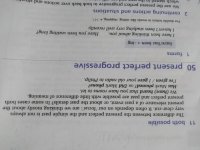
I provided the examples in the first post. They are from the book. The book doesn't give examples with the present perfect with 'who'. Maybe because it's according to the rule 'We prefer a past tense when we identify the person, thing or circumstances responsible for a present situation because we are thinking about the past cause, not the present result.'
'Look what Jack's given me.' (Thinking about the gift). It doesn't say that 'Look what Jack gave me' is not wrong.
I can understand that in 'How did you get that bruise?' The question itself is focused on a past event. Or in 'That's a nice picture. Did you paint it yourself? ' We are identifying the person who did the painting so the present perfect is wrong.There is another example. 'Why are you crying?' 'Granny hit me'. 'Granny has hit me is wrong' according to my textbook.
 
I provided the examples in the first post. They are from the book. The book doesn't give examples with the present perfect with 'who'. Maybe because it's according to the rule 'We prefer a past tense when we identify the person, thing or circumstances responsible for a present situation because we are thinking about the past cause, not the present result.'

That makes sense.


'Look what Jack's given me.' (Thinking about the gift). It doesn't say that 'Look what Jack gave me' is not wrong.

It's not wrong.

I can understand that in 'How did you get that bruise?', the question itself is focused on a past event. Or in 'That's a nice picture. Did you paint it yourself?' we are identifying the person who did the painting, so the present perfect is wrong. [space] There is another example. 'Why are you crying?' 'Granny hit me'. 'Granny has hit me' is wrong according to my textbook.

'Granny hit me' is much better. It's immediate.
Does it make sense now?
 
Last edited by a moderator:
Does it make sense now?
116336932_291223685431655_7847672467823515042_n.jpg

Then unlike these sentences (I coudn't upload the second screenshot 'We (have) heard that you have rooms to let.' 'Has Mark phoned?' Or 'Did Mark phone?' 'I have given or 'I gave your old radio to Philip' and in the sentence from the screenshot 'Look what Jack's given me' or 'Gave me'. Either tense is possible because we are not identifying the cause, we can choose to focus on a past event or the present relevance. It's only when we are identifying the 'cause' only the past simple works right?
There is a sentence in the screenshot 'That's a nice picture. Did you paint it yourself?' It's in the section about the past cause. The present perfect doesn't doesn't work because I am identifying the past cause of the action am I right?
 

Attachments

  • 116284767_610213476565366_4894010291272792861_n.jpg
    116284767_610213476565366_4894010291272792861_n.jpg
    78.5 KB · Views: 3
Status
Not open for further replies.

Ask a Teacher

If you have a question about the English language and would like to ask one of our many English teachers and language experts, please click the button below to let us know:

(Requires Registration)
Back
Top