Difference between to be verbs, stative verbs, and linking verbs

Status
Not open for further replies.

Masouma

Member
Joined
Mar 13, 2025
Member Type
Student or Learner
Native Language
Persian
Home Country
Afghanistan
Current Location
Pakistan
So I am not a native speaker. In our grammar book made by our academy, it is written that main verbs show act as primary verbs and either function as an action verb or state of being. However, for the state of being it is said that stative verbs or to be verbs show state of being but then what about the linking verb(linking verbs are not mention in our grammar book). linking verb connects the subject with the complement. so what is the difference?
 
it is written that main verbs show act as primary verbs
That makes little sense to me. What words are actually used in the book?
 
So it said. Stative verbs or to be verbs are used to show state of being. It can show a person's age, nationality, job or traits. So I am saying the same thing goes for linking verb, and in webs it is said to be verbs, linking verbs, and staive verbs are different. So if it applies for all of them, what is the difference.
 
Last edited:
@Masouma Posts #1 and #3 are puzzles. What do I mean by that? It takes some work to figure out what is being said. For one thing, it is unclear to me what "So it said" means.

Apparently, your spell checker is not helping you spell "stative" correctly.

Your question seems to be:

How are "to be" verbs, stative verbs, and linking verbs different?
 
I'm sorry for the confusion I caused.
By "so it said", I mean the grammar book that our academy created.
How are "to be" verbs, stative verbs, and linking verbs different?
Yes. I meant this. While we were told stative verbs and to be verbs are the same, other resources are telling otherwise.
 
So I am not a native speaker. In our grammar book, which was made written/produced by our academy, it is written says that main verbs show act as primary verbs and either function either as an action verb or as a state of being. However, for the state of being, it is said says that stative verbs or "to be" verbs show a state of being, but then what about the linking verbs space before a bracket (linking verbs are not mention in our grammar book)? A linking verb connects the subject with the complement no full stop here so what is the difference?
Please note my corrections above. I don't know what the underlined part means.

So it said. This is what it says:

Stative verbs or to be verbs are used to show state of being. It They can show a person's age, nationality, job or traits.

So I am saying the same thing goes for linking verbs, and in webs it is said the internet says that "to be" verbs, linking verbs, and stative verbs are different. So If it applies for to all of them, what is the difference?
Please note my corrections above. You need to stop starting sentences with "So".

I'm sorry for the confusion I caused.
By "so it said", I mean the grammar book that our academy created.
I think you mean that the "it" in "So it said" referred to the book. The whole three-word phrase can't refer to a grammar book. "So it said" isn't correct. You needed to say something like "That's what the book says".
Yes. I meant this. While we were told that stative verbs and "to be" verbs are the same, other resources are telling me otherwise.
See above.

Please provide links etc to these "other resources".
 
However, for the state of being it is said that stative verbs or to be verbs show state of being but then what about the linking verb(linking verbs are not mention in our grammar book). linking verb connects the subject with the complement. so what is the difference?

Stative verbs denote states (what you call 'states of being'). This is a semantics term, so to describe a verb as stative is to say something about the meaning. The same goes for active verbs.

The term 'linking verb' or 'copula verb' is a grammatical term. Linking verbs have a grammatical function, not a semantic one. To describe a verb as a linking verb is to say something about grammar. 'Auxiliary verb' and 'main verb' are also grammatical classes.

As per one of the main problems with your attempt to classify all verbs and nouns in your other thread, you must be careful first to understand what level of analysis you're working on. Make sure you understand first the difference between syntax and semantics.
 
Last edited:
Stative verbs denotes states (what you call 'states of being'). This is a semantics term, so to describe a verb as a stative verb is to say something about the meaning. The same goes for active verbs.

The term 'linking verb' or 'copula verb' is a grammatical term. Linking verbs have a grammatical function, not a semantic one. To describe a verb as a linking verb is to say something about grammar. 'Auxiliary verb' and 'main verb' are also grammatical classes.

As was one of the main problems with your attempt to classify all verbs and nouns in your other thread, you must be careful first to understand what level of analysis you're working on. Make sure you understand first the difference between syntax and semantics.
Thank you. I will try to be more careful next time.
 
Please note my corrections above. I don't know what the underlined part means.


Please note my corrections above. You need to stop starting sentences with "So".


I think you mean that the "it" in "So it said" referred to the book. The whole three-word phrase can't refer to a grammar book. "So it said" isn't correct. You needed to say something like "That's what the book says".

See above.

Please provide links etc to these "other resources".
Thanks for your feedback. Do you have any suggestions for improving my writing? I mean I make a lot of mistakes even though I think about the structure of the sentences that I write. In writing, I make a lot of errors.
By "other resources", I mean websites. If you search it, it will come up.
 
Thanks for your feedback. Do you have any suggestions for improving my writing? I mean I make a lot of mistakes even though I think about the structure of the sentences that I write. In writing, I make a lot of errors.
My first suggestion is that you look very carefully at any corrections anyone here makes and ensure you don't make the same mistakes again. Based on the post I corrected, you need to work on your use of articles, singulars and plurals, and punctuation. Also, look out for repetition and tautology. Look at the final two sentences in the quote box above. They basically say exactly the same thing. You could have stopped at the end of sentence three.
By "other resources", I mean websites. If you search it, it will come up.
That's not how it works. You need to provide us with that information.

I suggest that you give us a screenshot of the relevant page of your academy's grammar book, and at least one screenshot or hyperlink of a website that disagrees with it.
 
. Based on the post I corrected, you need to work on your use of articles, singulars and plurals, and punctuation. Also, look out for repetition and tautology. Look at the final two sentences in the quote box above.
Thanks.
I suggest that you give us a screenshot of the relevant page of your academy's grammar book, and at least one screenshot or hyperlink of a website that disagrees with it.
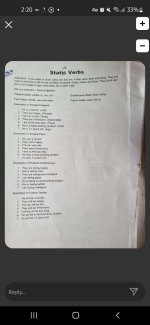
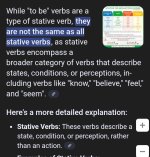
Here is the grammar book and screenshot.
 

Attachments

  • Screenshot_20250122-142025_Instagram Lite.jpg
    Screenshot_20250122-142025_Instagram Lite.jpg
    312.8 KB · Views: 7
  • Screenshot_20250315-202315_Google.jpg
    Screenshot_20250315-202315_Google.jpg
    137.7 KB · Views: 7
Status
Not open for further replies.

Ask a Teacher

If you have a question about the English language and would like to ask one of our many English teachers and language experts, please click the button below to let us know:

(Requires Registration)
Back
Top